I am pleased to announce the winners and commended poets in this year’s competition, selected by John Siddique.

There were 322 entries and John read them all and send his thanks to everyone. Prizes of £250, £100 and £50 will go to the top three poets. All winners and commended poets will receive a copy of the prizewinners's anthology which will comprise the top 23 poems chosen by John.
The Winners:
1st Prize : After the Storm. Ama Bolton (UK)
2nd Prize: Weeding. Corin Greaves (UK)
3rd Prize: I Know The Moon In All Her Phases. Victoria Gatehouse (UK)
Commended poems:
Ghosts. Susan Castillo (UK)
Storm Wren. Lizzie Ballagher (UK)
My Grandmother’s Angels. Victoria Gatehouse (UK)
Fingernails. Gail Dendy(South Africa)
The Challenge. Wendy Stern (UK)
Bramble Picking. David Mark Williams (UK)
Next Time I Will Smudge The Painted Sky. Jeanne Ellin (UK)
View From A High Window. Lizzie Ballagher (UK)
Struck. Helen Ford (UK)
Nocturnal. Joanne Key (UK)
Pieces of Suffering. Wendy Stern( UK)
Rainbow, Eleni Cay (UK)
Garden Birds. Gail Underwood (Cumbria, UK)
When I Think Of You. Michaela Ridgway (East Sussex, UK)
Flower Power. Sue Kindon (France)
I Never Trusted The Light Again. Beverley Ferguson (Bath, UK)
This Place. Eileen Harrison (The Netherlands)
In A Good Place. Pat Edwards (Wales, UK)
Early Morning Swim. Caroline Carver (Cornwall, UK)
Jesse Garon. Susan Castillo
------------------------------------------------------------------------------------------------------------------------------------
Poetry Space will be publishing a prize-winners’ anthology in the late Autumn. In the meantime please scroll down to read the top three poems and find out a bit more about the poets.
Ist Prize
After the Storm
sunshine on late roses,
a queue of swallows on the wire,
the sky washed clean and spread to dry:
she finds his gloves in the hall-table drawer:
leather moulded to the curl of his palms.
The smell of him,
Left, right, she draws them on.
Key deep in one pocket, jar in the other,
she gathers boots, lead, walking stick.
The spaniel dances at the door.
On the hill the wind shakes leaves
and jackdaws out of the sycamores.
Her coat flaps flightless wings.
She climbs until the sea
rises into sight, a flake of silver.
The dog bounces through heather.
Clouds hurry into the east.
Her gloved hands unscrew the lid
and tilt the jar. The last of his dust
streams out on the wind.
Ama Bolton
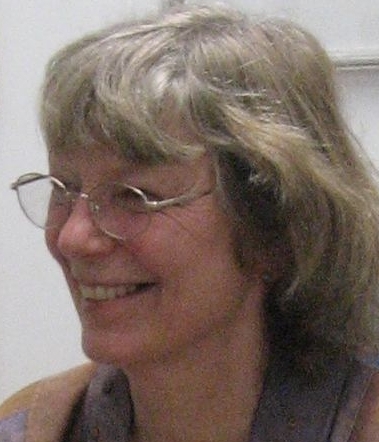
Ama Bolton is a member of the Wells Fountain Poets. Her work has appeared in Magma, Obsessed with Pipework and Blithe Spirit and in several anthologies, and on-line at The Stare's Nest.
What can I say? I'm surprised, thrilled, sopra la luna! I wrote this poem while walking in the Quantocks on a windy autumn day, and am delighted that it has found a home with Poetry Space.
What can I say? I'm surprised, thrilled, sopra la luna! I wrote this poem while walking in the Quantocks on a windy autumn day, and am delighted that it has found a home with Poetry Space.
John’s report
This poem is poignant and truthful. I love the images in it, the key in the pocket, the flapping coat. As soon as I read this poem I knew it was a winner. This is a poem that will stay with me, for all the best reasons. I feel like I met the people in this poem, and its story is delivered with grace and love.
--------------------------------------------------------------------------------------------------------------------------------
2nd Prize
Weeding
i used to feed the weeds
in our garden as a child
never understanding
the difference between
one petal and another
–
for the same reason
i picked her bony stem
and if we were ever to marry
i would lay fistful, upon fistful
of dandelions at the altar
and weeds would have their day
in our garden as a child
never understanding
the difference between
one petal and another
–
for the same reason
i picked her bony stem
and if we were ever to marry
i would lay fistful, upon fistful
of dandelions at the altar
and weeds would have their day
Corin Greaves

Corin is currently studying History and Philosophy at Bath Spa University. Once she graduates she hopes to teach. She has always had a passion for poetry, particularly the work of e e cummings and Anne Sexton, but only recently started seeing her own poems through to completion. Interested in writing intimate and honest poetry, this is the first poem Corin has shared and entered into a competition.
I am absolutely over the moon, especially because I don’t usually consider my poems worth finishing, let alone sharing. This has been a great confidence boost and I definitely intend to write more!
John’s report
I love simple clear writing, and I love humanity. This poem is full of both, as well as innocence, vulnerability and hope.; the things that are actually the real strengths of being human. This poem made me dance with joy.
-------------------------------------------------------------------------------------------------------------------------------------
3rd Prize
I Know The Moon In All Her Phases
i Biopsy
Tonight, there’s a dressing taped to my breast.
I draw curtains and she’s there, scalpel-thin
behind glass, the shadowed part invisible
to the naked eye. Tomorrow, someone
in a white coat will stain and mount my cells,
adjust the focus on the microscope, sip tea
from the machine, discuss last night’s soaps,
search for an expanded nucleus, a distorted edge.
ii Stage IIB
The doctors are teaching me a new language -
invasive and nodes and metastases,
words I never needed to know before this
and I’m rolling them around my mouth,
their aftertaste of sickness and fear and now
she’s bloated up, her steroid-face taking over
the window as I open the fridge, the next dose
here between the Marmite and the Dairylee.
iii The Field
The earth is warm beneath my back;
behind closed lids, the rage and permanence
of the sun. If I opened them there would be
a plump-cheeked child threading daisy chains,
a man with a prayer in his eyes and the moon
hanging on the edge of this daytime sky;
I sense her slow spin, know her
to be part blown, like a dandelion clock.
Victoria Gatehouse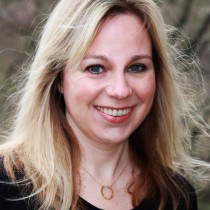
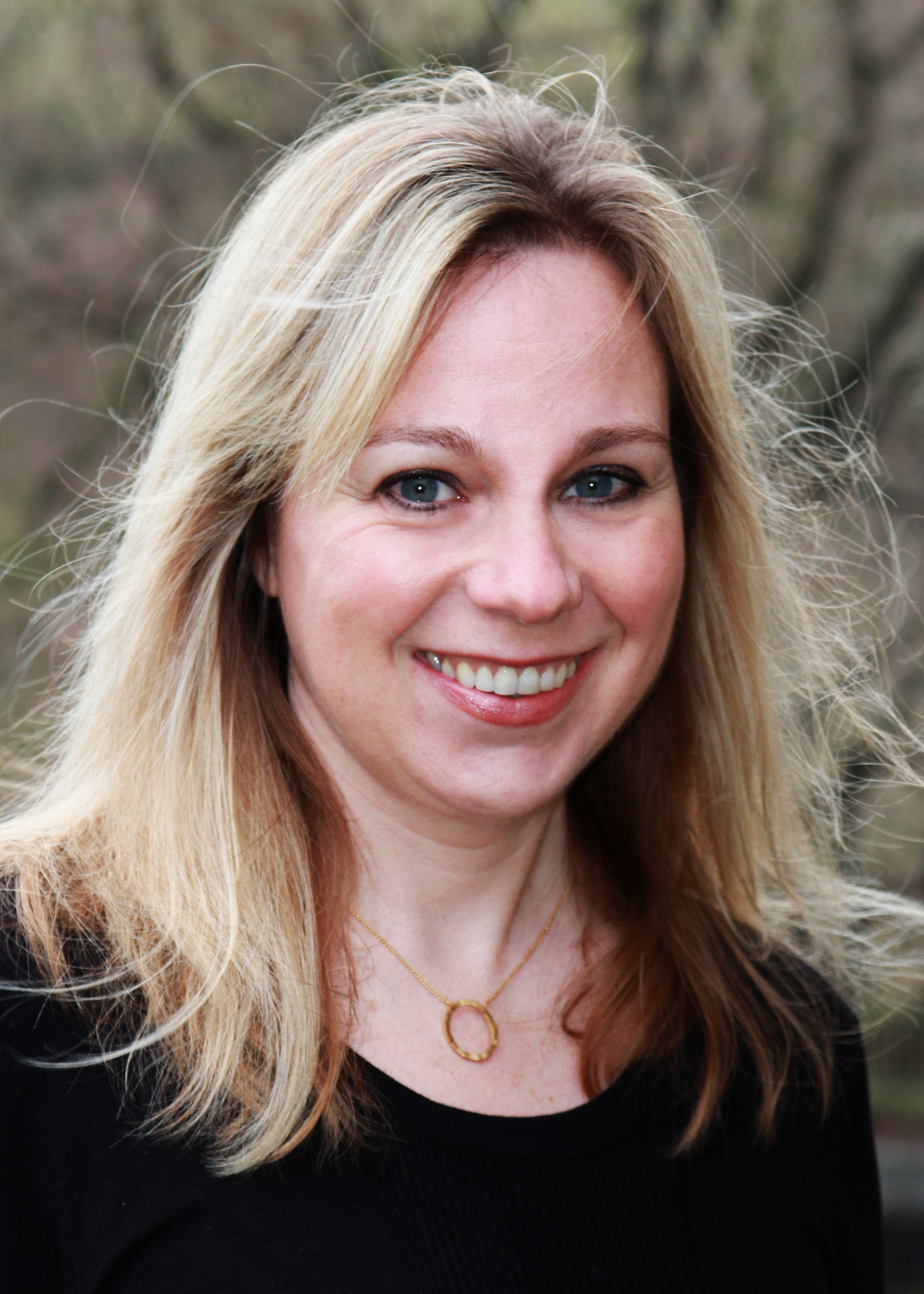
Victoria Gatehouse lives in West Yorkshire. Her poems have appeared in magazines and anthologies including Mslexia, Magma, The Rialto, Poetry News, The Interpreter’s House, Prole, Furies and Her Wings of Glass. Competition placements include Ilkley, Mslexia, Poetry News Members’ Competition, Prole Laureate and The Interpreter’s House. Victoria is a member of the Hebden Bridge Bookcase Poets.
Poetry Space is a great platform for both new and established poets so I was thrilled to hear that two poems of mine had been placed in this competition. As an admirer of John Siddique's work, it was incredibly self-affirming that he selected these poems. Looking forward to seeing the anthology!
John’s report
I love the narrative of this poem, which takes us through an experience which other lesser poets would have bludgeoned the reader with. The short line music brings an insistence to the images. From a nucleus through the language of cancer, through death and back to the everyday; this poem is an incredible journey, which I am thankful for.
----------------------------------------------------------------------------------------------------------------------------------------
John’s feedback on the commended poems will be published in the prize winners ‘ anthology. All that is left to say is a BIG THANK YOU from Poetry Space to everyone who entered the competition. All profits help Poetry Space to widen participation in poetry and bring more poets to recognition.
---------------------------------------------------------------------------------------------------------------------------------
John Siddique
Described ‘as one of the best poets of our generation’ by novelist Bina Shah, John Siddique grew up in a household without books, however his discovery of his local library as a child began a lifelong love affair with words and literature. He started writing poetry in 1991 after reading the work of ee cummings, Walt Whitman and DH Lawrence.
John’s poems, essays and articles have appeared in Granta, The Guardian, Poetry Review, The Rialto and broadcast on BBC Radio 4. His poetry collections for adults include the critically acclaimed Recital (2009) and Full Blood (2011) and a book for children, Don’t Wear It On Your Head was shortlisted for the CLPE poetry award in 2007. Awards include a Hawthornden Fellowship, Honorary Creative Writing Fellow (Leicester University) and Fellowship of the Royal Society of Arts.
He has been a resident poet in a variety of venues including Manchester Art Gallery, HMYOI Wetherby and Los Angeles for the British Council. He is currently Royal Literary Fund Fellow at York St John University.
This was John's address to poets when the competition was opened:
Dear poets
I’m really looking forward to receiving your poems for the 2015 Poetry Space Competition. I welcome your entries with an open heart and mind. It might be interesting if you would for a minute put yourself in your correspondent’s shoes, imagine you had been asked to judge this competition, what kind of poems would you want to see? One of the greatest mistakes I make with my writing at times, is where I lose sight of the reader. I’m not saying we should try and write to please that person, but perhaps we should write to please our own inner reader, not our writer. I have never thought of myself as a poet or writer, those are given titles, I am only a reader who occasionally finds himself thinking or feeling, ‘I’d love to read a book or a poem on…’ Yet on looking, it is as if there is a gap on the shelf, and no one has written the book I want to read. I take that always as a message from the universe or the muses telling me that it is my job then to write what needs to be written. So please send those poems, the ones that only you could write – essential and without cliché.
I’ll be honest with you, after being a reader and being on the planet as long as I have been I am not interested nor am likely to choose poetry that’s been designed to win a competition, there are many tricks poets have up their sleeves to make an impression, but I’m just John and I tend to be moved by literature which ascribes to human values and experience, that deals with our dignity and openness. Send me some real poetry that changes the world and life of the reader because it speaks of something essential about life, poetry that only you can bring to the page through your words, music and art, something that is a spark of life that will find a home in the heart of the reader.
I remember chatting with my friend, the late and sorely missed Glyn Hughes, about poems that become your friends. He would often discuss the dangers of coming from an ego place in our writing, and how his can manifest in so many ways, so that we don’t create something essential. Glyn would also talk about how the poems he loved were always with him; he could rely on them. If you have something you feel is like that up your sleeve, I’d love to see it. If you want to know more about my own writing ethos there is an artistic statement at www.johnsiddique.co.uk that pretty much tells you all you need to know, but I want to see your poems, your moments of life, written so that the spark still lives between the words and syllables.
With gratitude
John Siddique
-------------------------------------------------------------------------------------------------